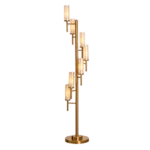
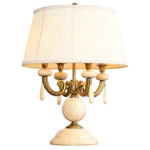


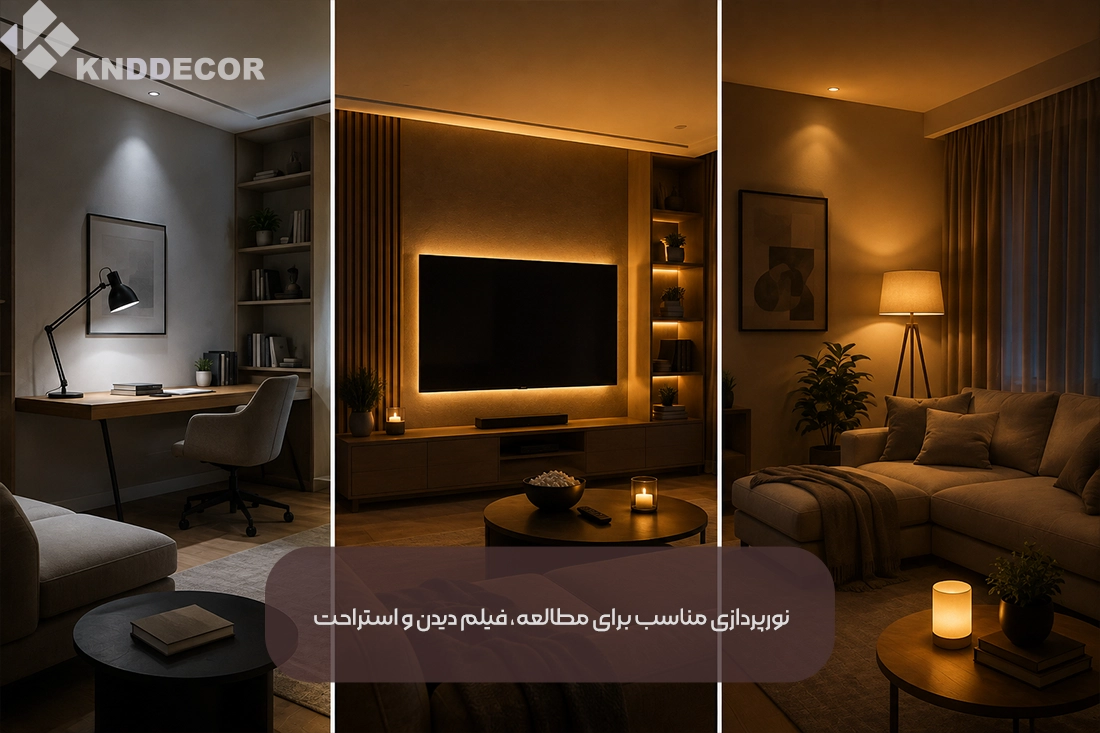
Proper Lighting for Reading, Watching Movies, and Relaxing; How to Choose the Best Light for Every Activity?
-
 نویسنده:
کارشناس فروش
- تاریخ انتشار:
- Reading time: 3 minutes

-
نویسنده:
کارشناس فروش
- تاریخ انتشار:
- Reading time: 3 minutes
Proper lighting is not just about brightening a space; it plays a crucial role in focus, relaxation, sleep quality, and even eye health. Many people use a single type of light for all their daily activities, whereas the right light for reading, watching movies, and resting is completely different. Choosing the correct light color, brightness intensity, and placement of light sources can create a more comfortable and enjoyable experience.
In this article, you will learn the principles of lighting for three important daily activities and how to make your home space more functional and pleasant without high costs.
Why does activity-based lighting matter?
Every activity requires a specific amount and type of light. If the light is too dim or too bright, it can cause eye strain, reduced focus, or discomfort.
The benefits of proper lighting include:
- Reducing eye strain
- Increasing focus while studying
- Creating relaxation during rest
- A better experience while watching movies
- Optimizing energy consumption
- Enhancing interior decoration beauty
The best light for reading
Reading requires light that clearly shows details without causing glare or eye fatigue.
Ideal Light Color
The best option:
- Natural White with a color temperature of approximately 3500 to 4500 Kelvin
This light provides a good balance between warm and cool tones and makes the color of the paper appear natural.
Light Intensity
For reading, the light should be sufficient but should not shine directly into the eyes. Using an adjustable desk lamp alongside the room’s general lighting yields the best results.
Light Placement
If you are right-handed, it is better to place the desk lamp on the left side so that your hand does not cast a shadow on the book. For left-handed individuals, the opposite is more suitable.
The best light for watching movies
Contrary to popular belief, turning off all the lights completely while watching a movie is not the best choice. A large discrepancy between the screen brightness and a dark environment can cause eye strain.
Ideal Light Color
- Soft Warm Light (2700 to 3000 Kelvin)
This light creates a sense of warmth and comfort, providing a pleasant cinematic atmosphere.
Light Intensity
The light intensity should be low and diffused indirectly throughout the space.
Best Light Sources
- Backlighting behind the TV
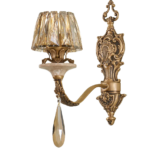
- Wall sconces with soft light
- Floor lamps with matte shades
- Dim decorative lights
This combination helps reduce eye fatigue while maintaining image contrast.
The best light for resting
During rest periods, the goal is to create a calm space free from tension. Very white or high-intensity lights may keep the brain alert and reduce relaxation.
Appropriate Light Color
- Warm Sunlight (2700 to 3000 Kelvin)
This light spectrum creates a greater sense of tranquility and is ideal for bedrooms and living rooms.
Light Intensity
The light should be soft and adjustable. If you use a dimmer, you can change the light intensity according to the time of day or the activity.
The Role of Chandeliers in Home Lighting
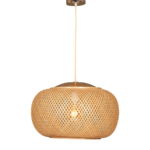
A chandelier is usually the main light source in many home spaces, but it is better if it is not the only source of illumination.
For Reading
The chandelier should provide general lighting, while a reading lamp provides focused light.
For Watching Movies
It is better to turn off the chandelier or set it to its lowest intensity, while keeping ambient side lights on.
For Resting
A chandelier with soft light or a dimmer, combined with a floor lamp or cove lighting, creates a peaceful atmosphere.
The Best Light Combinations for Different Spaces
Study Room
- Chandelier with natural light
- Adjustable desk lamp
- Uniform light without creating shadows
Living Room
- Central chandelier
- Ceiling cove lighting
- Floor lamp next to the sofa
- Decorative wall sconces
Bedroom
- Chandelier with warm light
- Bedside lamp
- Cove lighting behind the headboard (if possible)
Is LED light suitable for these activities?
Yes, if high-quality types are selected.
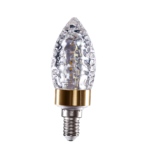
Advantages of LED bulbs:
- Low power consumption
- Long lifespan
- Less heat production
- Variety in light color
- Dimmable options in compatible models
Common Lighting Mistakes
To ensure proper lighting, avoid these mistakes:
- Using only a single light source
- Reading in very low light
- Watching movies in total darkness
- Using very cool white light in the bedroom
- Placing the light source at an angle that causes glare
- Using low-quality bulbs that flicker
How to achieve better lighting with one simple change?
If you don’t intend to change your decor, these actions can make a huge difference:
- Using bulbs with the appropriate color temperature
- Adding a floor lamp or a reading light
- Installing a dimmer to adjust light intensity
- Using ambient/hidden lighting in the living room
- Choosing a chandelier suitable for the space’s dimensions and the type of activity
These changes usually cost very little, but they significantly improve the quality of how you use your home space.
Summary
Choosing proper lighting for studying, watching movies, and relaxing has a direct impact on your comfort, focus, and relaxation. For studying, natural light with appropriate intensity is the best option. When watching movies, using soft, indirect light next to the screen reduces eye strain. For resting, warm, adjustable yellowish light creates a calm and pleasant atmosphere. By combining chandeliers, accent lights, and choosing the right light color, you can create a more functional and beautiful environment in your home without changing your decor.