

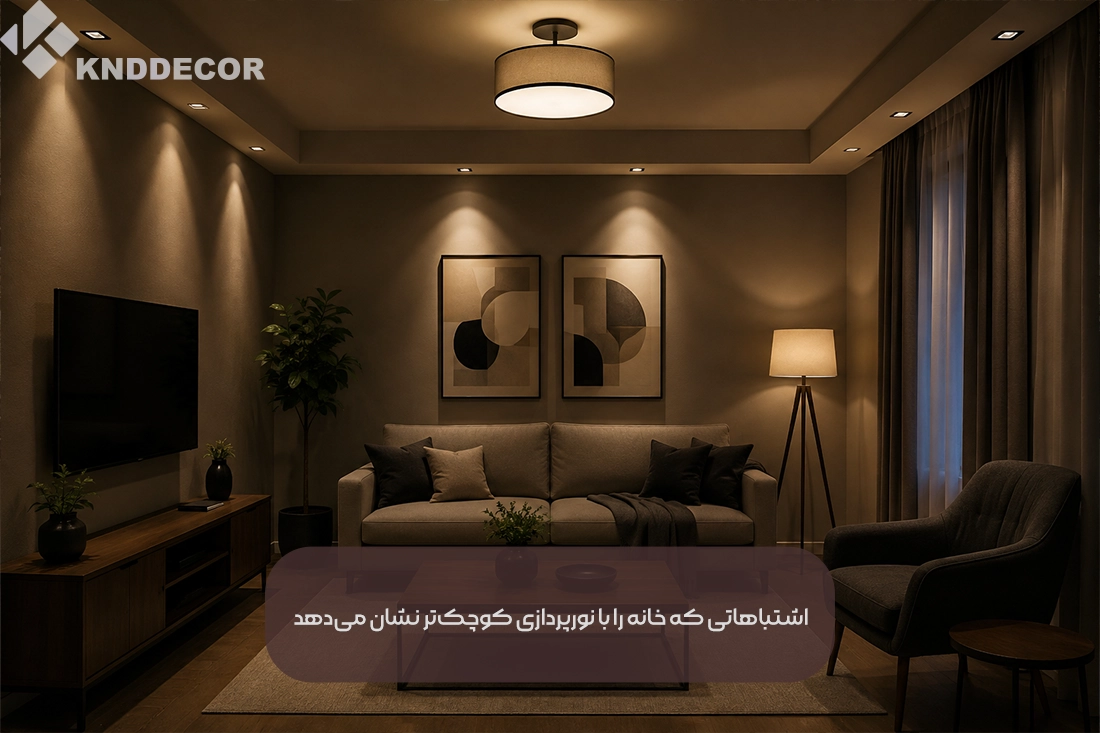
Mistakes That Make Your Home Look Smaller with Lighting
-
 نویسنده:
کارشناس فروش
- تاریخ انتشار:
- Reading time: 3 minutes

-
نویسنده:
کارشناس فروش
- تاریخ انتشار:
- Reading time: 3 minutes
Lighting is one of the most important factors in interior design and can make a home feel larger, brighter, and more spacious without changing its actual square footage. Conversely, if lighting is not done correctly, even a large house can appear small, gloomy, and cluttered. Many people focus only on the appearance of chandeliers or lamps when purchasing them, overlooking the fundamental principles of lighting.
In this article, you will learn about the mistakes that make a home look smaller with lighting so that by following a few simple tips, you can make your living space appear more open and attractive.
Why does lighting affect whether a house looks large or small?
Light has a direct impact on how the dimensions of a space are perceived. If light is distributed evenly throughout the environment, the boundaries of the room become less noticeable, making the space appear larger. However, improper lighting creates harsh shadows and dark spots, which makes the environment feel smaller and more enclosed.
1. Using only a single light source
One of the most common mistakes is installing a single chandelier in the center of the ceiling and relying solely on that light source.
This causes:
- Room corners to remain dark.
- The depth of the space to appear diminished.
- The environment to look smaller.
Solution
In addition to the chandelier, use complementary lighting such as:
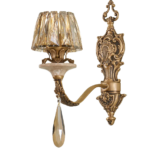
- Wall sconces
- Lampshades
- Cove lighting
- Recessed lights
to create balance.
2. Choosing an overly small chandelier
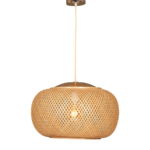
A small chandelier in a large living room disrupts visual proportion and makes the ceiling appear higher and the surrounding space look empty.
Solution
Choose a chandelier size that is proportional to the square footage and ceiling height.
3. Using very dim lighting
Low light can prevent walls from being clearly visible, making the home feel more enclosed.
If you don’t have sufficient lighting, even light-colored walls will lose their effectiveness.
4. Using very cold white light
Very cold lights (around 6500 Kelvin) can make an environment look lifeless and small, especially in small apartments.
Recommendation
For most residential spaces, use:
- Natural light (around 4000 Kelvin)
- Soft warm light (around 3000 Kelvin)
Use these instead.
5. Ignoring natural light
Completely blocking windows with thick curtains is one of the reasons a home looks small.
Solution
- Use sheer curtains.
- Do not block the path of natural light.
- Place a mirror opposite or near a window to reflect the light.
6. Not lighting up the corners of the room
Dark corners make the boundaries of the space more apparent, making the room appear smaller.
Solution
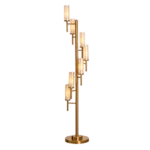
Place a floor lamp or a decorative light in the corners of the room.
7. Choosing inappropriate light color
Combining several different light colors in one space, such as ice white, sunny, and moonlight, causes visual clutter.
Solution
Choose consistent light colors so the space looks cohesive.
8. Installing a chandelier at an inappropriate height
If the chandelier is installed too low:
- The ceiling appears shorter.
- The room feels smaller.
Conversely, if it is installed too high, the light may not distribute properly throughout the space.
9. Excessive use of harsh shadows
Lights that cast light in only one direction create deep shadows and make the space appear smaller.
Solution
Use light sources that provide uniform light distribution.
10. Ignoring wall colors
Even the best lighting has less impact on very dark walls.
If the walls are dark, to prevent the space from looking small:
- Increase the light intensity.
- Use complementary lighting.
11. Not using cove lighting
Hidden ceiling or wall lighting creates visual depth and softens the boundaries of the space.
This type of lighting is particularly effective in modern homes and small apartments.
12. Choosing a chandelier that is disproportionate to the decor style
A chandelier that is not in harmony with the home’s space in terms of size or design disrupts the visual balance.
For example:
- An overly ornate chandelier in a minimalist home
- A very small chandelier in a large living room
- A classic model in a completely modern decoration
All of these can make the space appear smaller.
How to make a home look larger with lighting?
To create a greater sense of spaciousness, follow these tips:
- Use multiple light sources.
- Distribute light throughout all areas of the room.
- Use a chandelier that is proportionate to the square footage.
- Enhance natural light.
- Use mirrors to reflect light.
- Keep the light color consistent throughout the entire space.
- If possible, use a dimmer to adjust light intensity.
The best lighting combination for small homes
If your home’s space is small, this combination usually yields desirable results:
- Central chandelier for primary illumination
- Cove lighting to increase visual depth
- Wall sconces or floor lamps to eliminate harsh shadows
- Natural or soft warm light to create a sense of warmth and brightness
This combination makes the space appear more open and balanced.
Summary
Many homes appear smaller than their actual square footage due to improper lighting. Common mistakes include using only a single light source, choosing disproportionate chandeliers, insufficient brightness, inappropriate light color, neglecting natural light, and leaving room corners in darkness. By following a few simple principles and using a combination of ambient, task, and accent lighting, you can make your home feel brighter, larger, and more inviting without changing your decor.