


Warm Light vs. Cool Light: How It Affects Atmosphere and How to Choose the Best Lighting for Every Part of Your Home
-
 نویسنده:
کارشناس فروش
- تاریخ انتشار:
- Reading time: 4 minutes

-
نویسنده:
کارشناس فروش
- تاریخ انتشار:
- Reading time: 4 minutes
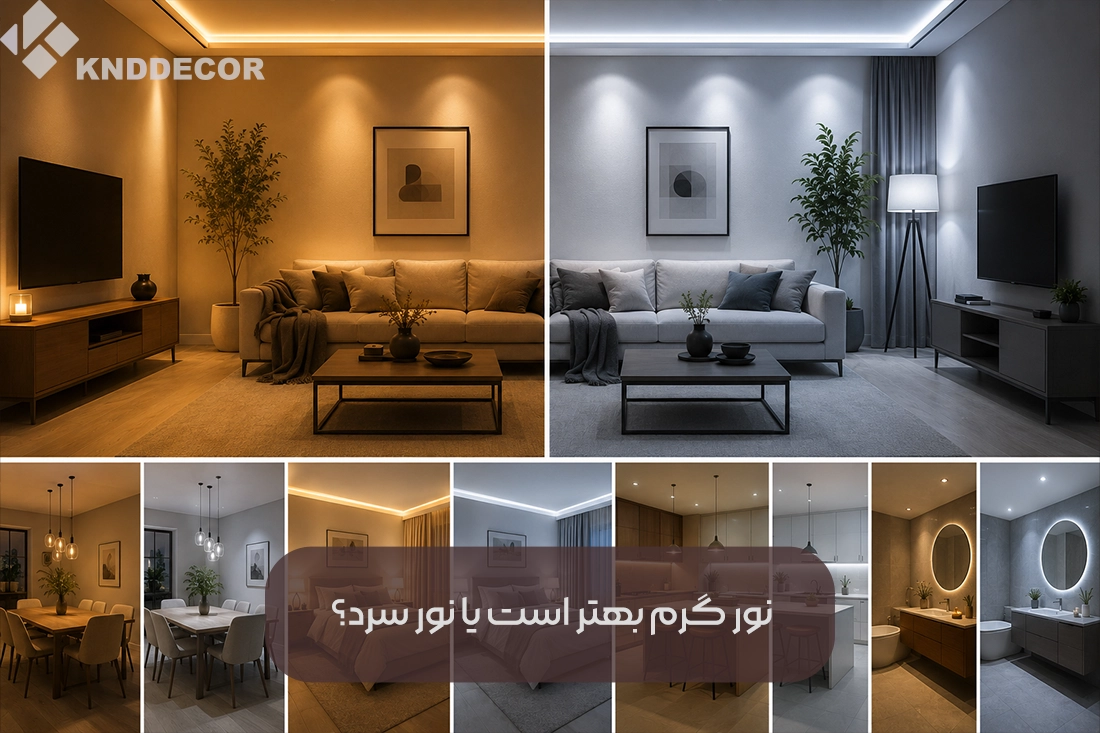
Choosing the light color is one of the most important decisions in interior lighting. Many people only focus on the appearance when buying a chandelier, lampshade, or bulb, whereas light color can completely change how people feel about a space. Warm light creates an intimate and relaxing atmosphere, while cool light makes the space appear brighter and more modern. But the main question is: is warm light better or cool light?
The answer to this question depends on the type of space, the function of the environment, and the decoration style. In this article, we will examine the differences between warm and cool light, the advantages and disadvantages of each, and their best applications.
What is the difference between warm light and cool light?
Light color is measured in Kelvin units; the lower the number, the warmer the light, and the higher the number, the cooler the light.
In general:
Light Type | Color Temperature |
Warm White | 2700 to 3000 Kelvin |
Natural White | 3500 to 4500 Kelvin |
Cool White | 5000 to 6500 Kelvin |
Each of these spectrums creates a different feeling in the environment.
What are the characteristics of warm light?
Warm light has a soft yellow or golden spectrum and usually evokes a sense of relaxation, comfort, and intimacy.
Advantages of warm light
- Creates a warm and pleasant atmosphere
- Suitable for relaxation
- Reduces the feeling of dryness and coldness in the environment
- Complements classic and neo-classical decoration
- Ideal for nighttime and resting hours
Warm light usually makes a home look more inviting and calmer.
What are the characteristics of cool light?
Cool light has a white spectrum leaning towards blue and creates a sense of cleanliness, precision, and more energy.
Advantages of cool light
- Increases the perception of brightness
- Suitable for performing precise tasks
- Better display of details
- Suitable for workspaces
- Complements modern decoration
This type of light makes the environment appear more formal and energetic.
Natural light; a balanced choice
Between warm and cool light lies natural light, which creates a perfect balance between the two.
Advantages:
- Natural color rendering
- Suitable for everyday use
- Reduces eye fatigue during many activities
- Compatible with most decoration styles
For this reason, natural light is one of the most popular choices for modern homes.
Best light color for the living room
The living room is a place for relaxation, parties, and gatherings.
The best choice:
- Warm light
- or natural light
If you have a classic decoration, warm light enhances the appearance of crystal or bronze chandeliers.
In modern homes, natural light is also a very suitable choice.
Best light for the bedroom
In the bedroom, the goal is to create relaxation.
It is recommended to use:
- Warm light
- Night lights with soft illumination
- Warm ambient/hidden lighting
Cool light in this space may reduce the feeling of relaxation, especially if used during late hours of the night.
Best light for the kitchen
The kitchen is a space for cooking and performing precise tasks.
The best option:
- Natural light
- or soft cool light
These lights make the colors of food appear more natural and provide better visibility on the work surface.
Best light for the office and study room
For reading and working, light should enhance focus.
The best choice:
- Natural light (around 4000 Kelvin)
This spectrum creates a good balance between eye comfort and clarity.
The effect of light on how large or small a space appears
The color of light can also influence the perception of a room’s dimensions.
Warm light
- Makes the space feel more intimate.
- Creates a greater sense of coziness in large homes.
Cool light
- Creates a sense of greater brightness.
- In some small spaces, it can make the environment appear more open and larger, provided it is used in a balanced manner.
In many homes, natural light provides the best balance between these two.
The impact of light color on decoration
Light color can change the appearance of home furnishings.
Warm Light
Creates a more beautiful effect for materials such as:
- Wood
- Fabric
- Cream colors
- Gold
- Bronze
Cool Light
Is more suitable for:
- White
- Gray
- Black
- Steel
- Glass
Can warm and cool lights be used together?
Yes, but it must be done following certain principles.
For example:
- Kitchen: Natural light
- Living room: Warm light
- Office/Study: Natural light
- Bedroom: Warm light
Avoid combining lights with completely different color temperatures in a single room, as it may cause visual clutter.
The role of the chandelier in choosing light color
A chandelier is not just a decorative item; the type of bulb it uses also affects the atmosphere of the space.
When buying a chandelier, pay attention to these points:
- Socket type or LED
- Possibility of replacing the bulb
- Dimmer compatibility
- Light intensity
- Appropriate color temperature for the space’s usage
If the chandelier uses replaceable bulbs, you can change the light color in the future to suit your needs.
Common mistakes in choosing light color
To achieve proper lighting, avoid these mistakes:
- Using cool light in the bedroom
- Choosing warm light for workspaces that require high precision
- Mixing several different light colors in one room
- Using low-quality bulbs that change color or flicker
- Choosing light color without considering wall colors and decoration style
Which light is better for the home?
If we want to make a general selection:
- Living Room: Warm or Natural light
- Bedroom: Warm light
- Kitchen: Natural light
- Office and Study Room: Natural light
- Bathroom and Restroom: Natural or soft cool light
- Hallway and Entrance: Natural light
In this way, each space will have the appropriate light according to its type of use.
Summary
Whether warm light or cool light is better does not have a single answer for all spaces. Warm light, by creating a sense of relaxation and intimacy, is the best option for bedrooms and living rooms. On the other hand, cool light is useful for work environments and spaces that require more brightness. If you are looking for a balanced choice, natural light is an ideal option for many parts of the home. Additionally, choosing the right chandelier, using high-quality LED bulbs, and coordinating the light color with the decoration will have a significant impact on the beauty and efficiency of home lighting.