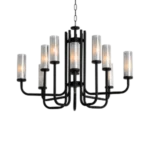
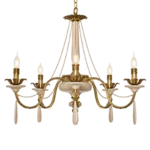
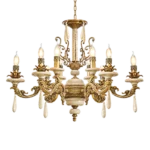
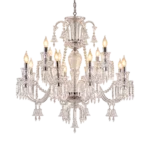


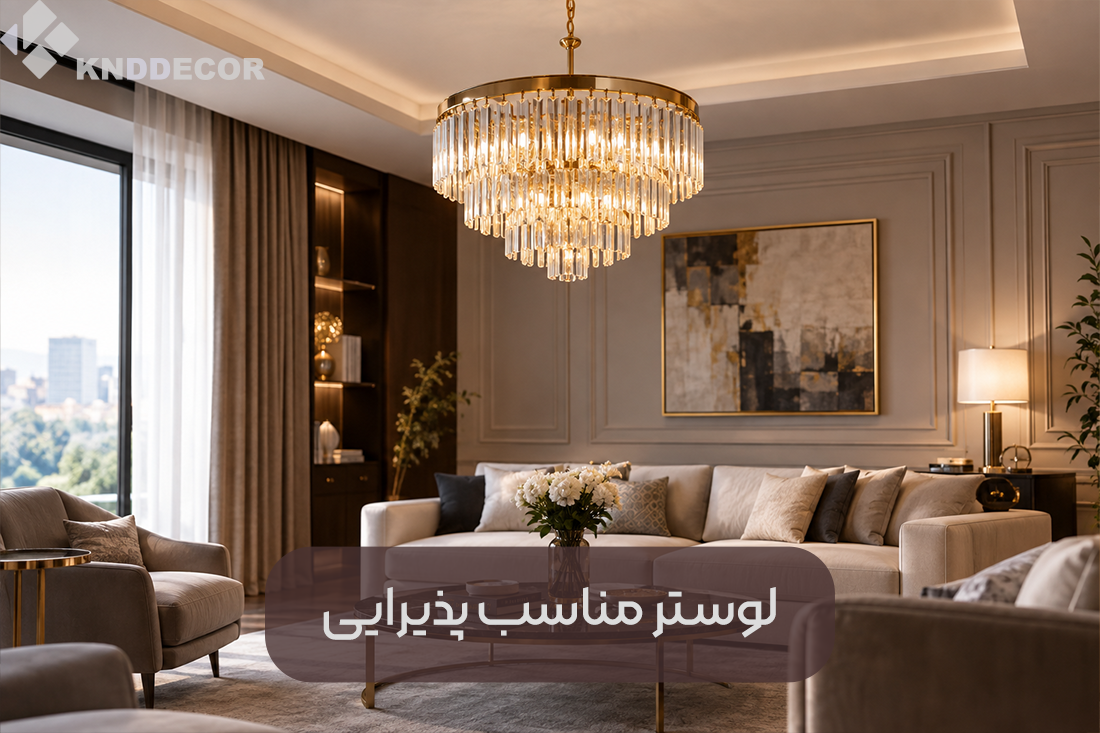
Chandelier for Living Rooms; A Guide to Choosing Models, Sizes, and Styles for Your Living Area
-
 نویسنده:
کارشناس فروش
- تاریخ انتشار:
- Reading time: 6 minutes

-
نویسنده:
کارشناس فروش
- تاریخ انتشار:
- Reading time: 6 minutes
On what basis should we choose a living room chandelier?
Before choosing a chandelier model, it is best to review several key features of your living room space. The most important factors are:
- Living room area (square footage)
- Room length and width
- Ceiling height
- Decoration style
- Size and shape of furniture
- Amount of natural light
- Color of ceiling and walls
- Chandelier placement
- Number of required light sources
A common mistake is considering only the appearance of the chandelier when purchasing. While a chandelier might look beautiful in a store, it may appear oversized in a small living room or lack sufficient impact in a large space due to its small dimensions.
Therefore, you should first determine the proportion of the chandelier to the space and then move on to style and design.
What is the best chandelier size for a living room?
One of the most important questions when buying a chandelier is what its appropriate diameter or width should be.
For an initial estimate, you can add the length and width of the room in meters and convert the resulting number into centimeters.
For example, if your living room is 4 meters long and 5 meters wide:
4 + 5 = 9
Consequently, the approximate suitable diameter for the chandelier could be around 90 centimeters.
This formula is a preliminary guide and should not be considered an absolute rule. The shape of the chandelier, ceiling height, furniture layout, and installation location also affect the appropriate size.
For large and formal living rooms, larger chandeliers can typically be used, whereas for smaller spaces, it is better to choose models with more controlled dimensions.
Chandelier suitable for small living rooms
In small living rooms, choosing a chandelier is primarily about creating balance. Using an oversized chandelier can make the room feel cluttered and the ceiling appear lower.
For such spaces, it is better to opt for models that:
- Have dimensions proportional to the room.
- Do not have an overly busy design.
- Do not create too much visual weight.
- Provide sufficient light for the intended space.
- Coordinate with the color and style of the furniture.
In modern decor, modern chandeliers are usually a great choice for small and medium living rooms due to their simpler designs and clean lines.
Of course, if the home’s style is classic or formal, smaller-sized classic models can also be used.
Chandelier suitable for large living rooms
In many homes, it is better not to consider the chandelier as the sole light source for the living room.
A proper lighting system can consist of several layers:
Main Light:
A chandelier or ceiling light that provides general illumination for the space.
Task Lighting:
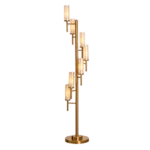
Such as a floor lamp for reading, sitting, or creating a bright zone next to furniture.
Decorative Lighting:
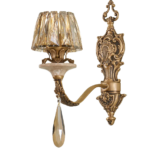
Such as wall sconces or accent lights to highlight a wall, painting, or decorative elements.
What are the characteristics of a modern chandelier for the living room?
In many homes, it is better not to consider the chandelier as the sole light source for the living room.
A proper lighting system can consist of several layers:
Main Light:
A chandelier or ceiling light that provides general illumination for the space.
Task Lighting:
Such as a floor lamp for reading, sitting, or creating a bright zone next to furniture.
Decorative Lighting:
Such as wall sconces or accent lights to highlight a wall, painting, or decorative elements.
For which types of living rooms is a neoclassical chandelier suitable?
Neoclassical style can actually be a choice between a classic appearance and the simplicity of modern styles.
If you use formal furniture, neutral colors, decorative details, and materials such as wood, stone, or metal in your living room but do not want the space to look too traditional, a neoclassical chandelier can be an appropriate choice.
Neoclassical chandeliers can usually provide a suitable formal and luxurious look to the living room without creating excessive clutter.
Classic Chandelier for Living Rooms
In many homes, it is better not to consider the chandelier as the sole light source for the living room.
A proper lighting system can consist of several layers:
Main Light:
A chandelier or ceiling light that provides general illumination for the space.
Task Lighting:
Such as a floor lamp for reading, sitting, or creating a bright zone next to furniture.
Decorative Lighting:
Such as wall sconces or accent lights to highlight a wall, painting, or decorative elements.
Crystal Chandelier for Living Rooms; A Choice for Luxury Decoration
In many homes, it is better not to consider the chandelier as the sole light source for the living room.
A proper lighting system can consist of several layers:
Main Light:
A chandelier or ceiling light that provides general illumination for the space.
Task Lighting:
Such as a floor lamp for reading, sitting, or creating a bright zone next to furniture.
Decorative Lighting:
Such as wall sconces or accent lights to highlight a wall, painting, or decorative elements.
How to Choose the Right Chandelier Color?
The color of a chandelier should be part of the overall color scheme of the living room. It doesn’t need to be an exact match with the furniture; rather, it is better if it has a visual connection with one of the main elements of the decoration.
For example, you can coordinate the color of the chandelier with the following:
- Furniture color
- Table legs
- Handles and metal details
- Curtain color
- Mirror frames
- Wall color
- Other decorative items
If most of the metal elements in the room are gold, using a chandelier with entirely silver details might create an unwanted contrast.
On the other hand, a controlled combination of different colors can create an attractive result in modern decors.
How many branches should a living room chandelier have?
تعداد شاخههای لوستر باید متناسب با اندازه فضا و میزان نور موردنیاز انتخاب شود.
برای پذیرایی کوچک، الزاماً به لوستر با تعداد شاخه زیاد نیاز ندارید. در بسیاری از موارد، یک مدل جمعوجور با نور مناسب میتواند عملکرد بهتری داشته باشد.
در مقابل، سالنهای بزرگ ممکن است به یک لوستر بزرگتر با تعداد منابع نور بیشتر نیاز داشته باشند.
البته تعداد لامپ تنها معیار تعیین میزان روشنایی نیست. نوع لامپ، توان مصرفی، رنگ نور، ارتفاع سقف، رنگ دیوارها و وجود منابع نور مکمل نیز تأثیر زیادی دارند.
Is one chandelier enough to light up the entire living room?
In many homes, it is better not to consider the chandelier as the sole light source for the living room.
A proper lighting system can consist of several layers:
Main Light:
A chandelier or ceiling light that provides general illumination for the space.
Task Lighting:
Such as a floor lamp for reading, sitting, or creating a bright zone next to furniture.
Decorative Lighting:
Such as wall sconces or accent lights to highlight a wall, painting, or decorative elements.
For this reason, alongside a chandelier, you can use a floor lamp next to a sofa or in a corner of the living room.
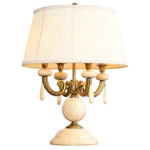
For side tables and consoles, table lamps can serve as a complementary yet decorative light source.
Additionally, using wall paneling can help create more depth in living room lighting.
Where should we install the chandelier in the living room?
In many homes, it is better not to consider the chandelier as the sole light source for the living room.
A proper lighting system can consist of several layers:
Main Light:
A chandelier or ceiling light that provides general illumination for the space.
Task Lighting:
Such as a floor lamp for reading, sitting, or creating a bright zone next to furniture.
Decorative Lighting:
Such as wall sconces or accent lights to highlight a wall, painting, or decorative elements.
Suitable chandeliers for living rooms with low ceilings
In low ceilings, it is best to pay attention to the body height in addition to the chandelier’s diameter.
A chandelier with an appropriate diameter but excessive height can make the living area appear smaller.
For low ceilings, models with compact designs, lower heights, and more open forms are usually a more logical choice.
In these circumstances, modern chandeliers and certain neoclassical models can be suitable options; however, the final choice should be based on the actual dimensions of the room.
Chandelier suitable for high-ceiling living rooms
High ceilings provide more opportunities to use large and statement chandeliers.
In such spaces, multi-arm, multi-tier, or taller models can be utilized. However, a chandelier should not be installed excessively high simply because the ceiling is high.
The goal is for the chandelier to remain within the visual range of the decor and maintain its connection with the furniture and other elements of the room.
For large receptions with high ceilings, classic, neoclassical, and crystal models can create a magnificent effect.
Using candle holders alongside the living room chandelier
If your living room decoration style is classic or formal, you can use complementary decorative elements alongside the chandelier.
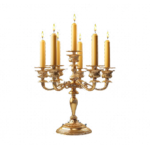
Candle holders are one of the options that can be placed alongside the chandelier, on a console, table, or other decorative areas of the living room.
The important point is that all elements do not need to be exactly identical. Coordination in color, shape, material, and style usually creates a more natural result than matching every single item perfectly.
Common Mistakes When Buying a Living Room Chandelier
In many homes, it is better not to consider the chandelier as the sole light source for the living room.
A proper lighting system can consist of several layers:
Main Light:
A chandelier or ceiling light that provides general illumination for the space.
Task Lighting:
Such as a floor lamp for reading, sitting, or creating a bright zone next to furniture.
Decorative Lighting:
Such as wall sconces or accent lights to highlight a wall, painting, or decorative elements.
For this reason, alongside a chandelier, you can use a floor lamp next to a sofa or in a corner of the living room.
For side tables and consoles, table lamps can serve as a complementary yet decorative light source.
Conclusion: Which is the best chandelier for the living room?
In many homes, it is better not to consider the chandelier as the sole light source for the living room.
A proper lighting system can consist of several layers:
Main Light:
A chandelier or ceiling light that provides general illumination for the space.
Task Lighting:
Such as a floor lamp for reading, sitting, or creating a bright zone next to furniture.
Decorative Lighting:
Such as wall sconces or accent lights to highlight a wall, painting, or decorative elements.
For this reason, alongside a chandelier, you can use a floor lamp next to a sofa or in a corner of the living room.
For side tables and consoles, table lamps can serve as a complementary yet decorative light source.
Additionally, using wall paneling can help create more depth in living room lighting.
With this method, in addition to choosing a beautiful chandelier, you can also design the living room lighting to suit your needs and home decor style.