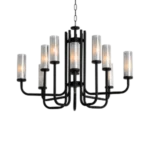
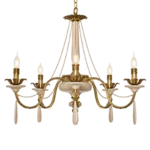
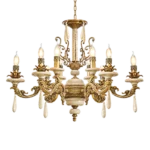
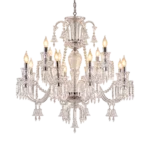
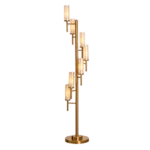
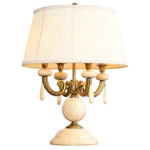
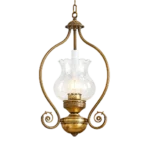


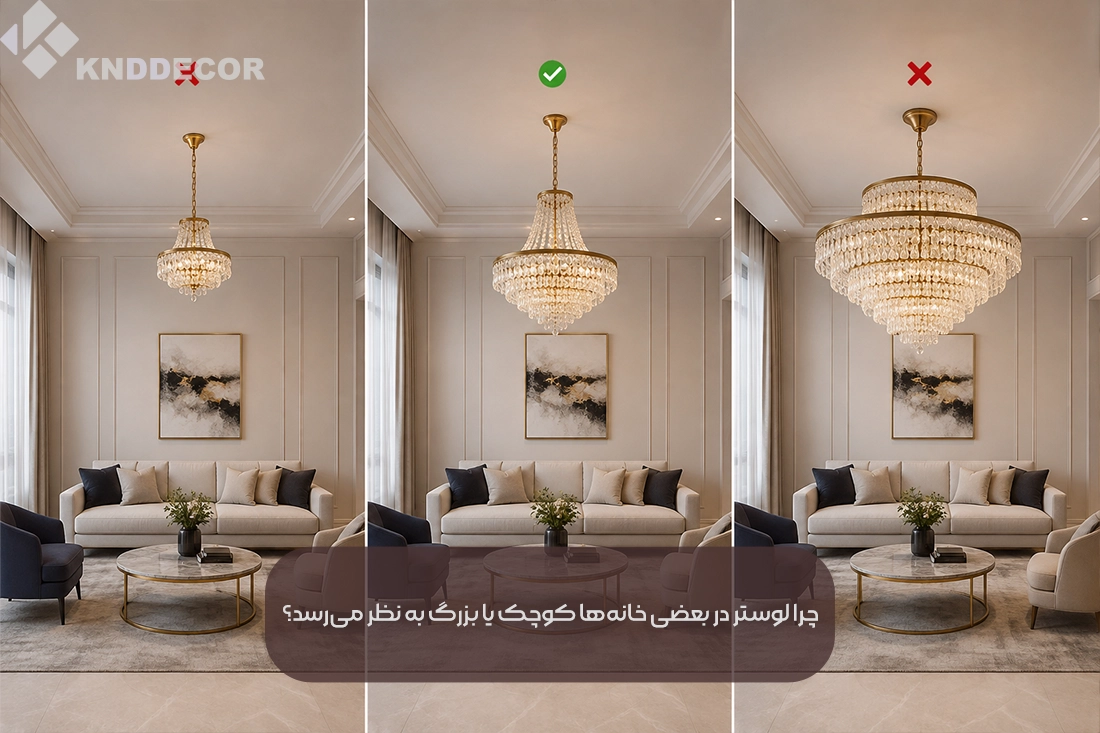
Why Do Chandeliers Look Too Small or Too Large in Some Homes? A Guide to Matching Chandelier Scale with Space
-
 نویسنده:
کارشناس فروش
- تاریخ انتشار:
- Reading time: 5 minutes

-
نویسنده:
کارشناس فروش
- تاریخ انتشار:
- Reading time: 5 minutes
Sometimes we enter a home and, even though the chandelier is beautifully designed, something in the spatial composition feels off. In a living room, the chandelier looks too small, while in another space, the same piece is so large that it draws almost all the attention to itself. The reason for this difference usually isn't related to the quality or beauty of the chandelier; the main issue is the proportion of the chandelier to the scale of the space. Choosing a chandelier based solely on appearance, color, or the number of arms cannot yield a desirable result. Room dimensions, ceiling height, the size of the table or furniture, and even the distance of the chandelier from surrounding elements all play a role in this matter. The chandelier must be proportionate to its surrounding space. One of the common mistakes when buying a chandelier is evaluating the size of the piece independently. For example, a chandelier might look very impressive in a showroom, but after installation in a large living room, it may appear small and ineffective. The opposite also happens frequently. A chandelier designed for a large hall, if installed in a small space, can make the environment look cluttered and heavy. For this reason, before browsing different living room chandelier models, it is better to first determine the dimensions of the environment. The length and width of the room, ceiling height, and the placement of furniture are pieces of information that make the selection much more precise. The relationship between chandelier diameter and room dimensions: A practical method for an initial estimation of the chandelier size is to pay attention to the length and width of the room. For example, if a room is approximately 4 meters long and 3 meters wide, the sum of these two numbers is 7 meters. Converting this number to centimeters—meaning about 70 centimeters—can be a good starting point for checking the chandelier diameter. Of course, this number is not an unchangeable rule. Decoration style, ceiling height, and the form of the chandelier can cause the final size to be chosen slightly larger or smaller. In modern and minimalist decorations, a simpler form usually allows a chandelier with a relatively large diameter to look light. In contrast, classic models with many details may have a greater visual presence even in smaller dimensions. Ceiling height; a factor that should not be ignored: The diameter of the chandelier is only one part of the story. Ceiling height also has a direct impact on the choice. In low ceilings, using very hanging chandeliers can make the room space look disproportionate. In such conditions, more compact or flush-mount models are usually a more logical choice. However, if the ceiling is very high, a chandelier that is too short can get lost in the space. In this case, models that have more height or a more elongated form can better fill the empty volume above the room. If you are still unsure about choosing the dimensions, it is best to note the exact measurements of the environment before purchasing and then look for different models; especially when you intend to buy a chandelier for a large or renovated space. Why does furniture affect the size of the chandelier? A chandelier does not only interact with the ceiling and walls; furniture is also part of its visual composition. Suppose a large dining table is placed in the center of the space. If the chandelier is too small relative to the table, the final combination will look weak. In such circumstances, it is usually better to harmonize the size of the chandelier with the dimensions of the table. BFor rectangular tables, a perfectly round chandelier is not always necessary. Elongated, multi-branch, or hybrid models can better cover the table surface. Conversely, above round tables, chandeliers with a central and symmetrical form usually create better harmony. A beautiful chandelier is not necessarily suitable for every space. One of the important points in buying a chandelier is that the beauty of a model does not mean it is suitable for all spaces. For example, a highly detailed crystal model might look amazing in a classic living room, but in a small space with simple furniture, it may create a cluttered appearance. On the other hand, a minimalist chandelier might look very chic in a small room, but it may fail to create an appropriate focal point in a large hall. Therefore, it is better to first determine the style and scale of the space and then look for the chandelier's form. Where should we use large chandeliers? In large halls, high ceilings, villas, and spaces where there is a large distance between decorative elements, using large chandeliers can yield very good results. However, being large is not enough on its own. If the chosen model has many details, there must be enough space for it to be seen. In such environments, one can even opt for branched and multi-layered models; models that, due to their greater volume and height, have a greater ability to create a focal point. In contrast, if your space is limited, it is better to choose a model that has a more delicate form despite having appropriate dimensions, rather than unnecessarily increasing the size. Can two chandeliers be used for a large space? In some large living rooms, a single chandelier in the center of the ceiling cannot visually cover the entire desired area. In these circumstances, using two main light sources can be a suitable option. Of course, placing two chandeliers without considering the composition of the space will not yield good results. It is better to determine the installation location, the distance between the two light points, and their relationship with the furniture from the beginning. This is especially important in elongated living rooms or large floor plans, where dividing the space into two functional sections can be more logical than using one very large chandelier. Color and material also affect the size of the chandelier. Two chandeliers of the same dimensions do not necessarily appear to be the same size. Transparent glass models, crystal, or those with light colors usually appear lighter. In contrast, dark colors, heavy metals, and dense forms can make the chandelier look larger and more voluminous. Therefore, when choosing a crystal chandelier, one should not only check the product's diameter. The number of crystals, height, the form of the branches, and the degree of openness or closedness of the structure are also effective in the visual perception of size. Simulate the installation space before purchasing. A simple way to avoid making a wrong choice is to imagine the chandelier's placement on the ceiling with an approximate size before buying. You can even use paper or adhesive tape to mark the approximate diameter of the chandelier on the floor. Then, evaluate its size from the distance you typically view it from, such as the entrance or the seating area. This simple method helps distinguish between the "actual size" and the "perceived size".Understand what is meant by "how the chandelier appears in the space." If you are still undecided between several models, it is best to place the technical specifications of each model alongside your space's dimensions and not decide based solely on product photos. Fit is more important than being large or small. Ultimately, there is no definitive answer to the question, "Is a large chandelier better or a small one?" The ideal chandelier is one that has a balanced size in combination with the ceiling, walls, furniture, and other decorative elements. Sometimes a 60 cm model is perfectly suitable for a space, while in another environment, even an 80 cm model may look small. Therefore, before purchasing a chandelier, it is best to simultaneously consider three factors: space dimensions, ceiling height, and furniture scale. If these three factors are correctly aligned with your decoration style, even a simple chandelier can create a very attractive focal point in your home. In summary, choosing the right chandelier depends more on understanding the scale of the space than on following a fixed number or size. The chandelier's diameter, ceiling height, table size, furniture volume, and even the color and material of the body all affect how the chandelier "appears" in the environment. For this reason, before selecting the final model, first measure the installation space, consider the placement of the furniture, and then proceed to your preferred design and style. In interior decoration, the largest or most flashy chandelier is not always the best choice; the best model is the one that fits your space exactly right.