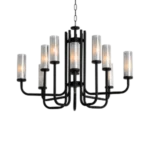
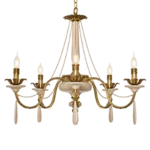
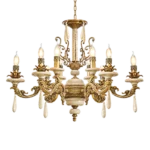
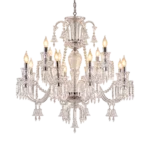
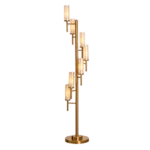
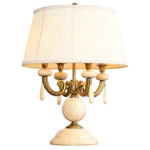
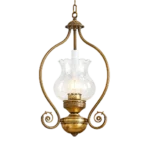


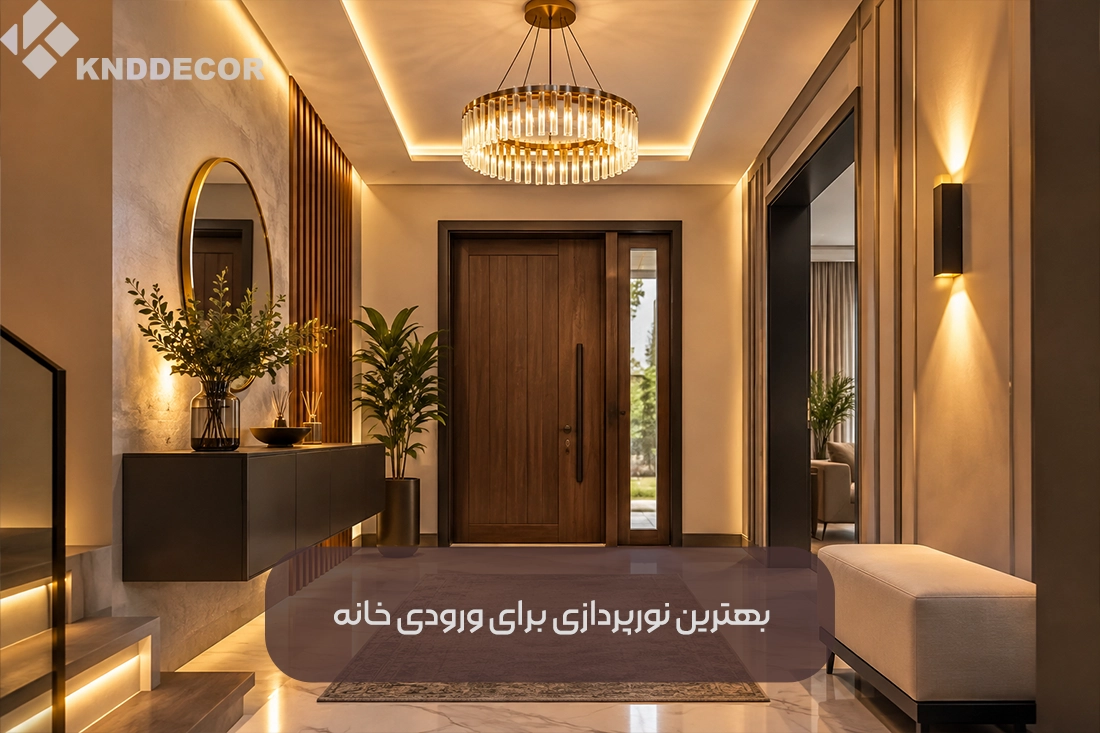
Best Lighting for Home Entrances; A Guide to Choosing Entrance Lamps and Chandeliers
-
 نویسنده:
کارشناس فروش
- تاریخ انتشار:
- Reading time: 6 minutes

-
نویسنده:
کارشناس فروش
- تاریخ انتشار:
- Reading time: 6 minutes
The home entrance is the first space seen upon entering, and therefore plays a crucial role in creating the initial impression of the decor. Even if the entrance area is small, the right lighting choice can make it appear brighter, more organized, and more attractive.
However, the best lighting for a home entrance is not limited to just installing a single ceiling light. The right combination of ambient lighting, accent lighting, and, if necessary, decorative lighting can improve both the functionality of the space and the appearance of the entrance.
In this article, we will explore what type of lighting is suitable for a home entrance, when to use a chandelier, and how to coordinate entrance lighting with your home decor.
Why is entrance lighting important?
A home entrance is usually not a large space, but it is highly significant due to its position.
Proper entrance lighting can:
- Make the space appear brighter and more organized.
- Clearly define the entry path.
- Highlight mirrors, consoles, and accessories.
- Create a greater sense of warmth and intimacy.
- Showcase the home’s decor style from the very beginning.
- Make small spaces appear visually more open.
On the other hand, very intense or inappropriate lighting can make the entrance look cold, harsh, or even smaller.
What is the best method for lighting a home entrance?
For most homes, the best results come from combining several types of light:
Ambient Light: To illuminate the entire entrance
Task Light: For areas such as a mirror or console
Accent Light: To highlight paintings, plants, or decorative elements
Decorative Light: To create visual flair and more character
You don’t need to use all these sources in every entrance. Your choice should be based on the size of the space, ceiling height, and your specific needs.
1. Chandelier; An attractive choice for large entrances
If the home entrance has a relatively high ceiling, using a chandelier can be one of the best options.
A suitable entrance chandelier can act as a focal point and grab attention from the moment you enter.
For large entrances, models such as the following can be used:
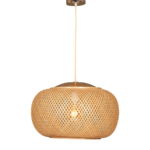
- Pendant chandeliers
- Crystal chandeliers
- Modern chandeliers
- Classic chandeliers
- Multi-arm chandeliers
However, choosing the right size is very important. A chandelier should not be so large that it obstructs the walkway or makes the entrance look cluttered.
Chandeliers for small home entrances
If the entrance is small, low-profile or flush-mount ceiling models are usually a better choice.
Very long chandeliers may limit the passage space and make the ceiling appear lower.
In such cases, minimal and compact models can provide appropriate lighting without occupying too much space.
2. Ceiling lights for small entrances
Ceiling lights are one of the simplest options for entryway lighting.
This type of light is particularly suitable when:
- The ceiling is low.
- The entryway space is small.
- The walkway is narrow.
- The decoration is minimal.
A ceiling light can provide the necessary general lighting, which can be used alongside a wall light or accent lighting.
3. Wall Sconces; A Practical and Decorative Option
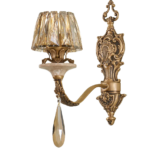
If you have enough space on your entryway wall, a wall sconce can serve as both a lighting source and a decorative element.
Wall sconces are very practical for illuminating areas such as:
- Mirrors
- Consoles
- Paintings/Art
- Decorative walls
In narrow entryways, using wall lights can be a great alternative to large ceiling lights.
4. Mirror Lighting in the Home Entryway
A mirror is a common element in a home entryway, and proper lighting can significantly enhance the appearance of the space.
If you have a mirror in the entryway, you can use lights on both sides or backlighting behind the mirror.
The light should be positioned so that it does not create excessive shadows on the face.
Placing a very strong light source on one side of the mirror may cause improper shadows.
Therefore, balanced lighting around the mirror usually yields better results.
5. Hidden Lighting (Cove Lighting) for the Home Entryway
Hidden lighting can be used to create soft and decorative light.
If the entryway ceiling has drywall or a false ceiling, hidden lighting can be used to create indirect illumination.
This method is very suitable for homes with a modern or minimal style.
Hidden lighting can be implemented in:
- Ceilings
- Ceiling edges
- Niches
- Behind decorative panels
An important note is that hidden lighting alone is not always sufficient for full entryway illumination. If necessary, it can be combined with general lighting.
6. Accent Lighting for Paintings and Decoration
If you have a specific artwork, painting, plant, or decorative element in your home entrance, accent lighting can highlight it.
For example, a small directional spotlight can focus light directly onto the artwork.
This method ensures the viewer’s eye finds a specific focal point instead of seeing a completely uniform space.
7. What is the best light color for a home entrance?
Choosing the light color depends on the home’s style and the function of the space.
Warm Light
For many residential entrances, warm light is a great choice because it creates a greater sense of intimacy and comfort.
This type of light works particularly well with:
- Classic
- Neoclassic
- Vintage
- Rustic
decorations.
Natural or Neutral Light
If you want colors to appear more natural, neutral light can be an excellent option.
This light color is also widely used in modern and minimalist decorations.
Cool Light
Cool light usually creates a brighter and more formal feel, but excessive use in a residential space may make the entrance appear cold and unwelcoming.
In most cases, more important than choosing a specific color is matching the light color with the rest of the home’s lighting.
8. Lighting for home entrances with low ceilings
In entrances with low ceilings, it is better to use fixtures that do not occupy much vertical space.
Suitable options may include:
- Ceiling lights
- Low-profile chandeliers
- Cove lighting
- Recessed spotlights
- Wall sconces
.
Additionally, using indirect light on the ceiling can make the ceiling appear visually more open and higher.
9. Lighting for home entrances with high ceilings
In contrast, high ceilings allow for the use of striking pendant chandeliers.
A long chandelier can fill the empty space above the entrance and serve as a focal point for the decoration.
In duplex houses, multi-tier chandeliers or elongated models can also be attractive choices.
Of course, the length of the chandelier should be coordinated with the ceiling height and the walking path.
10. Lighting for narrow home entrances
In narrow entrances, it is best to avoid occupying floor space and walkways.
Ceiling lights, narrow wall sconces, and cove lighting are usually more practical choices.
If a console is placed on one side of the entrance, you can install a mirror above it and turn that area into a focal point with proper lighting.
11. Lighting the Home Entrance with a Console
The combination of console + mirror + lamp is one of the most popular combinations for a home entrance.
For example, you can:
- Place a mirror above the console.
- Install two wall sconces on both sides of the mirror.
- Or place a decorative lamp on the console.
If there is enough space, a small chandelier can also be placed above this combination.
In this case, it is better to control the intensity of various light sources so that the entrance area does not become overly bright.
12. Lighting a Modern Home Entrance
In modern decoration, simplicity usually holds more importance.
For such a space, you can use:
- Linear lights
- Geometric chandeliers
- Minimalist ceiling lights
- Cove lighting
- Simple wall sconces
In this style, it is better not to have too many lights, and each light source should have a specific role.
13. Lighting a Classic Home Entrance
In the classic style, a chandelier can play a more significant role.
Crystal, bronze, gold, or multi-arm models can harmonize with this style.
To complete the space, you can also use:
- Classic wall sconces
- Framed mirrors
- Decorative lamps
- Warm lighting
If the chandelier has a lot of detail, it is better to choose simpler light sources for the rest to prevent the decoration from looking cluttered.
14. Does a Home Entrance Need a Chandelier?
No. Not all entrances require a chandelier.
If the entrance is small, narrow, or has a low ceiling, a ceiling light or a wall sconce might be a better choice.
A chandelier is most effective when:
- The ceiling height is appropriate.
- There is sufficient space.
- The chandelier does not obstruct the walkway.
- The decor needs a focal point.
Therefore, instead of simply searching for an “entrance chandelier,” it is better to first assess the lighting needs and the architectural conditions of the space.
15. Ideal light intensity for a home entrance
The entrance should not be dark, but extremely intense light is not necessary either.
The main goals are to:
- Ensure the walkway is clearly visible.
- Make doors and surrounding objects easily recognizable.
- Ensure mirrors and decor are sufficiently illuminated.
- Avoid a harsh contrast between the entrance light and the interior light when entering.
It is best to select the light intensity based on the size of the entrance and the color of the surfaces.
Dark walls usually require more light compared to light-colored walls.
Common mistakes in entryway lighting
Using an overly bright light
Excessive light can make a small space look harsh and unnatural.
Installing a large chandelier in a small entrance
This can restrict the walkway.
Ignoring the mirror
If there is a mirror in the entrance, its lighting is very important.
Using completely different light colors
Combining very warm and very cool lights in a small space may reduce decor harmony.
Placing the light in an inappropriate spot
The light should be installed so that it does not cause glare or create unwanted shadows.
Disregarding the decor style
The light should be consistent with the shape, color, and material of other entrance elements.
How to make a small entrance look brighter and larger?
If the home entrance is small, a few simple methods can yield great results:
Use light colors.
Light walls and ceilings reflect light better.
Add a mirror.
A mirror can make the entrance space appear more open by reflecting light.
Do not limit light to just the center of the ceiling.
Using wall lights or accent lighting can create more depth.
Use low-profile chandeliers.
A light that doesn’t occupy too much space is more suitable for a small entrance.
Don’t forget indirect lighting.
Hidden lighting can create soft and even brightness.
What points should we consider when buying an entrance light or chandelier?
Before purchasing, check these items:
- Entrance size
- Ceiling height
- Walkway width
- Decoration style
- Wall color
- Presence of mirrors and consoles
- Amount of natural light
- Type of light required
- Light dimensions
- Chandelier height
- Possibility of changing the bulb
- Energy consumption
If you intend to buy a chandelier, compare the dimensions and height of the chandelier with the entrance space before purchasing.
Best lighting combination for a home entryway
For a medium-sized entryway, you can consider the following combination:
Chandelier or ceiling light: Ambient lighting
Wall sconces: Complementary lighting
Mirror light: Task lighting
Accent lighting: Highlighting paintings or decor
This combination allows you to adjust the intensity and type of light based on your needs.
For example, when guests arrive, you can turn on both ambient and decorative lights, but for daily use, you can activate only the main light.
Summary
The best lighting for a home entrance doesn’t necessarily mean using the most expensive chandelier or the highest number of lights. A successful design must create a balance between brightness, beauty, functionality, and space size.
In large entrances with high ceilings, a chandelier can be a very attractive focal point. In small spaces or those with low ceilings, recessed lights, low-profile chandeliers, wall sconces, and cove lighting are usually more practical choices.
Additionally, if you have a mirror, console, painting, or accessories in your home entrance, you can use accent lighting to draw attention to these elements.
Finally, before buying a chandelier for your home entrance, first check the space size, ceiling height, and walking paths, then choose a model that, in addition to its beautiful appearance, provides appropriate light and the necessary harmony with your decor.
A well-lit entrance is not just meant to be bright; it must create a good feeling and provide the first appropriate impression of the home space.