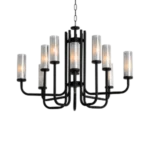
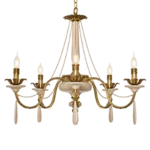
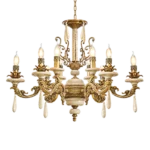
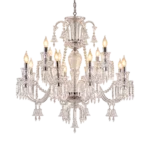


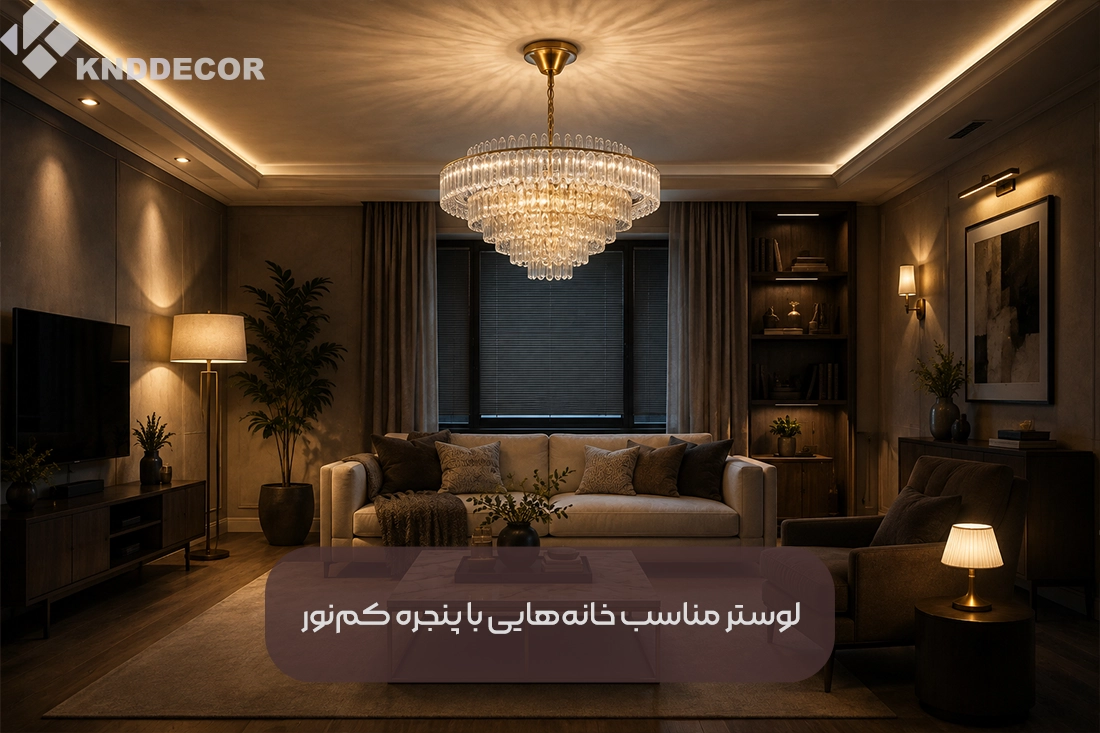
Chandeliers for Homes with Low Natural Light; A Guide to Choosing the Best Lighting
-
 نویسنده:
کارشناس فروش
- تاریخ انتشار:
- Reading time: 6 minutes

-
نویسنده:
کارشناس فروش
- تاریخ انتشار:
- Reading time: 6 minutes
When a home has few windows or natural light does not enter the interior space sufficiently, choosing a lighting system becomes even more important. In such a home, a suitable chandelier can, in addition to providing the necessary light, make the interior look brighter, more spacious, and more beautiful.
Of course, not every chandelier is suitable for a dimly lit home. The number of bulbs, the amount of illumination, the light color, the body design, and even the color of the ceiling and walls all affect the final result. Therefore, if you have a home with limited natural light, it is better when buying a chandelier to not only focus on the product’s appearance but also consider its performance.
In the following, we will examine which type of chandelier is more suitable for homes with low light and what points you should consider when making a selection.
Why is choosing a chandelier more important for a dimly lit home?
Natural light is one of the most important factors in making a home look bright and spacious. When windows are small, the orientation of the house is not ideal, or sunlight does not enter the room well, the interior space may appear dark even during the day.
In such conditions, the chandelier can act as the primary light source to compensate for much of the lack of natural light. However, a weak or disproportionate chandelier might only illuminate one part of the room, leaving other corners dark.
For this reason, in dimly lit homes, it is better to consider the chandelier as part of a multi-layered lighting system, rather than just the home’s sole source of illumination.
1. Multi-arm chandeliers are a better choice
One of the simplest ways to increase home brightness is to choose a chandelier with more branches and more bulb placements.
For example, instead of using a three-arm chandelier in a relatively large living room, you can use models with a higher number of bulbs; provided that the light output is proportional to the room’s square footage.
The advantage of multi-arm chandeliers is that light is distributed across more points, reducing the likelihood of creating dark spots.
However, the number of bulbs alone is not a sufficient criterion. The type and wattage of each bulb must also be considered.
2. Choose a chandelier that distributes light downwards and outwards
The design of the chandelier body has a significant impact on how light is distributed.
In a dimly lit home, models that block much of the bulb’s light may not be a suitable choice. For example, if a shade or cover completely encloses the bulb, part of the light remains trapped within that area.
Models with more open bulb spaces or those that direct light downwards and outwards are generally more practical for such spaces.
Therefore, when choosing a chandelier, ask the seller:
Does the light from this model mostly spread downwards, or does it also illuminate the surroundings and the ceiling?
3. Choose a chandelier with a bright body and details
The color and material of the chandelier can also affect the visual perception of brightness.
In homes with little natural light, using light colors alongside an appropriate lighting system can make the interior space appear more open.
Chandeliers featuring:
- Clear glass
- Crystal
- Polished metals
- Light colors
can reflect light better in the environment and create a brighter effect.
Of course, this does not mean that black or dark chandeliers are unsuitable. If the interior design requires a dark chandelier, its lack of light can be compensated for with ceiling and wall lighting.
4. LED bulbs are a suitable option for dimly lit homes
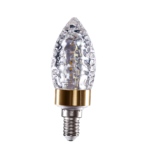
In many cases, using LED bulbs can be a suitable choice for providing home lighting. These bulbs are produced in various wattages and light colors, providing the possibility to choose the appropriate brightness level.
To choose the right bulb, do not only focus on wattage. The light output of the bulb, which is usually specified in Lumen, is also important.
If your goal is to increase the brightness of your home, it is better to ask the seller about the actual light output of the bulb when purchasing.
5. For a dimly lit home, choose the light color wisely
Light color has a significant impact on the perceived brightness of the environment.
Very warm lights usually create a greater sense of comfort and intimacy, but if an entire dimly lit home is lit with very yellow light, the environment may still appear visually dark.
On the other hand, very cold white light can make the environment feel overly dry and impersonal.
For many residential spaces, natural light or a balanced warm white can be a suitable choice; however, the final choice should be coordinated with the function of the space and the decoration colors.
6. A crystal chandelier can make the light more attractive
In addition to its decorative role, crystal chandeliers can enhance the lighting effect due to the reflection and refraction of light in the crystals.
When the bulb’s light hits the crystal, various reflections are created in the environment, which can give the interior space a more brilliant appearance.
For this reason, if your home’s decoration style is classic, neoclassical, or luxury, a suitable crystal chandelier can be an attractive option for a dimly lit space.
Of course, the actual brightness capacity of the chandelier must still be considered; crystal alone is not a substitute for sufficient light.
7. Combine the chandelier with other light sources
If your home truly has little natural light, you shouldn’t rely solely on the chandelier for all your lighting needs.
A proper combination can include the following:
Chandelier: Providing general lighting
Ceiling lights or Halogens: Illuminating dark areas
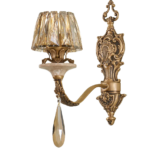
Wall Sconces: Creating side lighting and visual depth
Table Lamps: Providing localized light for reading or relaxing
Hidden/Cove Lighting: Creating soft and uniform illumination
This method allows you to turn on only the light you need at different times of the day.
8. Consider the ceiling height when choosing a chandelier
Ceiling height also plays a significant role in choosing the right chandelier.
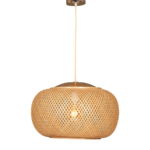
If your ceiling is low, using very long or hanging chandeliers might make the space look smaller and more cluttered. In such cases, flush mount or semi-flush mount models are usually more practical choices.
In homes with high ceilings, you have more freedom to use hanging chandeliers and larger models.
Therefore, before purchasing, measure the ceiling height and inform the seller.
9. Coordinate the chandelier size with the room's square footage
A small chandelier cannot provide sufficient brightness in a large space; on the other hand, an oversized chandelier may make the space feel cluttered.
To choose the right size, you should consider factors such as:
- Room area
- Ceiling height
- Installation location
- Amount of furniture
- Required light intensity
together.
If your home is dimly lit, do not be tempted to simply choose the largest chandelier available. Sometimes, a medium-sized chandelier paired with several complementary light sources produces a much better result.
10. Pay attention to light reflection in your decor
Choosing a chandelier is only part of the solution for brightening a home. The colors and materials surrounding the chandelier also affect the outcome.
Light-colored walls, light curtains, glossy surfaces, and mirrors can help with better light reflection and distribution.
For example, placing a mirror in the right position opposite a light source can reflect light throughout the space and make the environment appear more spacious.
What is the best chandelier for a dimly lit home?
To give a general answer, a chandelier suitable for a dimly lit home is a model that:
- Provides sufficient illumination;
- Has a number of bulbs proportional to the space’s dimensions;
- Does not concentrate light in only one spot;
- Allows for the use of suitable and energy-efficient bulbs;
- Is compatible with the ceiling height;
- Complements the decoration style;
- Can be used alongside other light sources.
Therefore, one specific model cannot be considered the best for all dimly lit homes. The right choice depends on the square footage, ceiling height, decoration style, and the lighting needs of each space.
Which chandelier should we choose for different rooms in the house?
Dimly lit living room
In a living room, a multi-arm chandelier with appropriate illumination can serve as the primary light source. Combining it with cove lighting and wall sconces will yield better results.
Dimly lit bedroom
In the bedroom, it is better to use bedside lamps or wall sconces in addition to a chandelier so that light intensity can be reduced during rest.
Dimly lit kitchen
In the kitchen, in addition to ceiling lights, under-cabinet lighting is very important. If you have a dining table or an island, using pendant lights above them can be both functional and decorative.
Dimly lit home office
In a home office, uniform light is very important. It is better to combine a chandelier or ceiling light with a suitable desk lamp so that there is sufficient light on the desk surface while working.
Mistakes to avoid when buying a chandelier for a dimly lit home
Choosing a chandelier based solely on appearance:
A beautiful chandelier does not necessarily provide adequate lighting for your home.
Ignoring square footage:
Lighting power must be proportional to the size of the environment.
Using overly yellow light:
In some dimly lit homes, excessively warm light can increase the feeling of darkness in the space.
Relying on a single light source:
Especially in large spaces, it is better to use multiple layers of light.
Disregarding ceiling height:
An inappropriate model can cause problems in terms of both aesthetics and functionality.
Summary
Choosing the right chandelier for homes with low natural light requires simultaneous attention to both aesthetics and functionality. The chandelier must be able to provide sufficient illumination while remaining harmonious with the dimensions and style of the home’s decor.
Multi-arm models with appropriate lighting, chandeliers with wide light distribution, and glass or crystal models can be excellent options. However, the best results are achieved when the chandelier is used alongside ceiling lights, wall sconces, floor lamps, and indirect lighting.
Ultimately, if your home receives little natural light, when buying a chandelier, instead of focusing solely on the product’s appearance, examine the lumen output, bulb type, light color, chandelier dimensions, and the possibility of combining it with other light sources. This way, you can create a brighter, more spacious, and visually cohesive space.