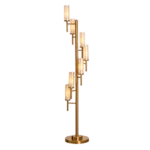
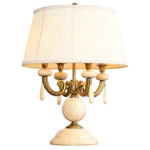
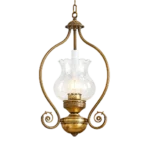


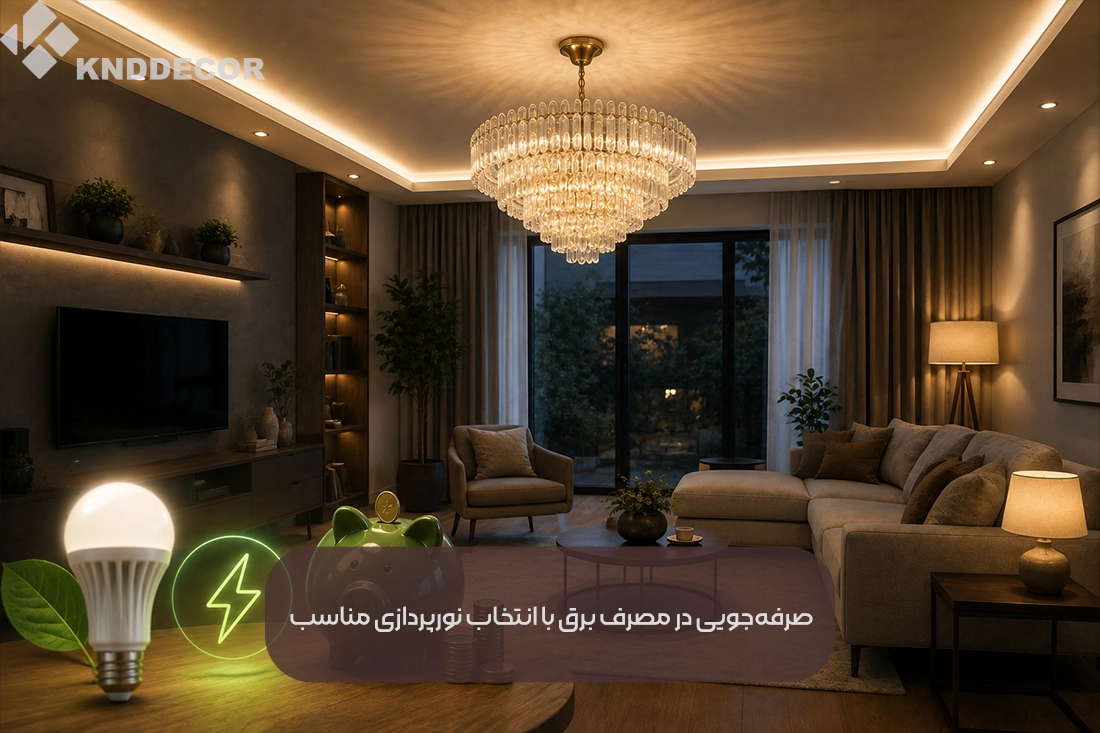
Saving Electricity with Proper Lighting Choices: How to Reduce Home Electricity Costs Without Sacrificing Brightness?
-
 نویسنده:
کارشناس فروش
- تاریخ انتشار:
- Reading time: 4 minutes

-
نویسنده:
کارشناس فروش
- تاریخ انتشار:
- Reading time: 4 minutes
With rising energy costs, reducing electricity consumption has become a major concern for families. Many assume that to lower electricity bills, they must use less light; however, the reality is that choosing proper lighting and standard equipment can significantly reduce energy consumption without compromising lighting quality.
From selecting the type of chandelier and bulb to the correct placement of light sources, everything impacts electricity consumption. In this article, you will learn practical solutions for saving electricity through principled lighting.
Why does lighting matter in electricity consumption?
Lighting accounts for a significant portion of a home’s electricity consumption. Using high-consumption bulbs or improper lighting not only increases costs but also reduces the lifespan of the equipment.
Proper lighting ensures:
- Reduced electricity consumption.
- Lower electricity bills.
- Increased bulb lifespan.
- Uniform and standard illumination.
- Elimination of the need for extra lights.
1. Replace old bulbs with LED bulbs
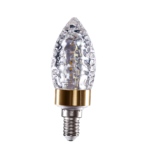
The most important step to reducing electricity consumption is using LED lamps.
Advantages of LED lamps
- Much lower electricity consumption compared to incandescent and halogen bulbs
- Long lifespan
- Less heat production
- Instant illumination
- Variety in light color and power consumption
If you are still using old bulbs, replacing them with LEDs is one of the most effective ways to reduce electricity costs.
2. Choose a chandelier suitable for your home's square footage
Many people choose chandeliers with a large number of bulbs to make a space brighter; however, if the size of the chandelier is coordinated with the room’s area, sufficient lighting can be achieved with fewer bulbs.
For example:
- Small rooms do not need large chandeliers with many bulbs.
- In large spaces, using several light sources with lower wattage is usually more efficient than one high-consumption chandelier.
3. Make the most of natural light
Sunlight is free, healthy, and consumes no electricity.
To make the most of natural light:
- Use thin or semi-transparent curtains.
- Do not block windows with large objects.
- Place mirrors in locations that reflect natural light.
- Design walls with light colors to help light spread better throughout the space.
This will reduce your need to turn on lights during the day.
4. Wall color affects electricity consumption
It might seem strange, but wall color also affects the amount of electricity consumed.
Light-colored walls:
- Reflect light better.
- Make the space appear brighter.
- Reduce the need for additional light sources.
In contrast, very dark colors absorb a large amount of light, which may require more lighting.
5. Use layered lighting
One common mistake is turning on all the lights in the house for a simple activity.
It is better to divide lighting into several layers:
- Ambient lighting (Chandelier)
- Task lighting (Reading lamp or floor lamp)
- Accent lighting (Wall sconces or cove lighting)
For reading or working, turning on a reading lamp is usually much more efficient than turning on all the lights in the room.
6. Use a dimmer to adjust light intensity
A dimmer allows you to adjust the brightness level.
Its advantages:
- Reduces electricity consumption when full light is not needed.
- Extends the lifespan of bulbs.
- Creates a more pleasant atmosphere for relaxation or parties.
Of course, to use a dimmer, you must use LED bulbs that are compatible with this feature.
7. Keep chandeliers and lamps clean
Dust on glass or chandelier crystals can reduce light intensity.
As a result, many people turn on more lights to compensate for this reduction.
Regularly cleaning your chandelier and lights ensures:
- Better light distribution.
- More brightness with the same amount of electricity consumption.
8. Choose the appropriate light color
Sometimes the problem of insufficient lighting is related to the color of the light rather than the bulb’s wattage.
For most home spaces:
- Natural light (around 4000 Kelvin)
- or Warm light (2700 to 3000 Kelvin)
are suitable choices.
Choosing the right light color makes the environment appear brighter and more natural without the need to increase the number of bulbs.
9. Only light up the necessary spaces
One of the simplest ways to save is to turn off the lights in rooms you are not using.
You can also:
- Use low-consumption lights for hallways.
- Use motion sensors in storage rooms or garages so the light only turns on when someone is present.
10. Use high-quality lighting equipment
The quality of lighting equipment significantly impacts energy consumption and lifespan.
When purchasing chandeliers and bulbs, pay attention to the following:
- Build quality
- Compatibility with LED bulbs
- Uniform light distribution
- Ease of bulb replacement
- Use of standard sockets
Common mistakes that increase electricity consumption
To reduce electricity costs, avoid these mistakes:
- Using old, high-consumption bulbs
- Choosing a chandelier that is disproportionate to the room size
- Turning on all lights simultaneously
- Ignoring natural light
- Neglecting to clean lights and chandeliers
- Using very dim light and compensating by increasing the number of bulbs
- Buying low-quality bulbs with low luminous efficacy
Is an LED chandelier more energy-efficient?
In many new models, LED chandeliers consume less electricity than chandeliers with traditional bulbs because they use high-efficiency light sources.
However, if a standard chandelier is equipped with standard and energy-efficient LED bulbs, it can also be a very economical option in terms of energy consumption. Therefore, in addition to the type of chandelier, the quality and type of bulb also play a crucial role in reducing electricity consumption.
Summary
Saving electricity through proper lighting is not limited to just turning off the lights. Choosing a chandelier suitable for the room size, using high-quality LED bulbs, utilizing natural light, proper distribution of light sources, installing dimmers, and maintaining lighting equipment all contribute to reducing energy consumption. By following these principles, you can manage electricity costs without compromising lighting quality, while creating a beautiful, functional, and standard environment in your home.